5 Key Things to Check Before Buying a Blazer or Coat
A well-fitted blazer is not just an outfit, it’s a statement of precision, craftsmanship and self-assurance. Here are five essential details to check before you invest in your next coat or blazer.
1. Shoulder Drape: No Dimples, No Distractions
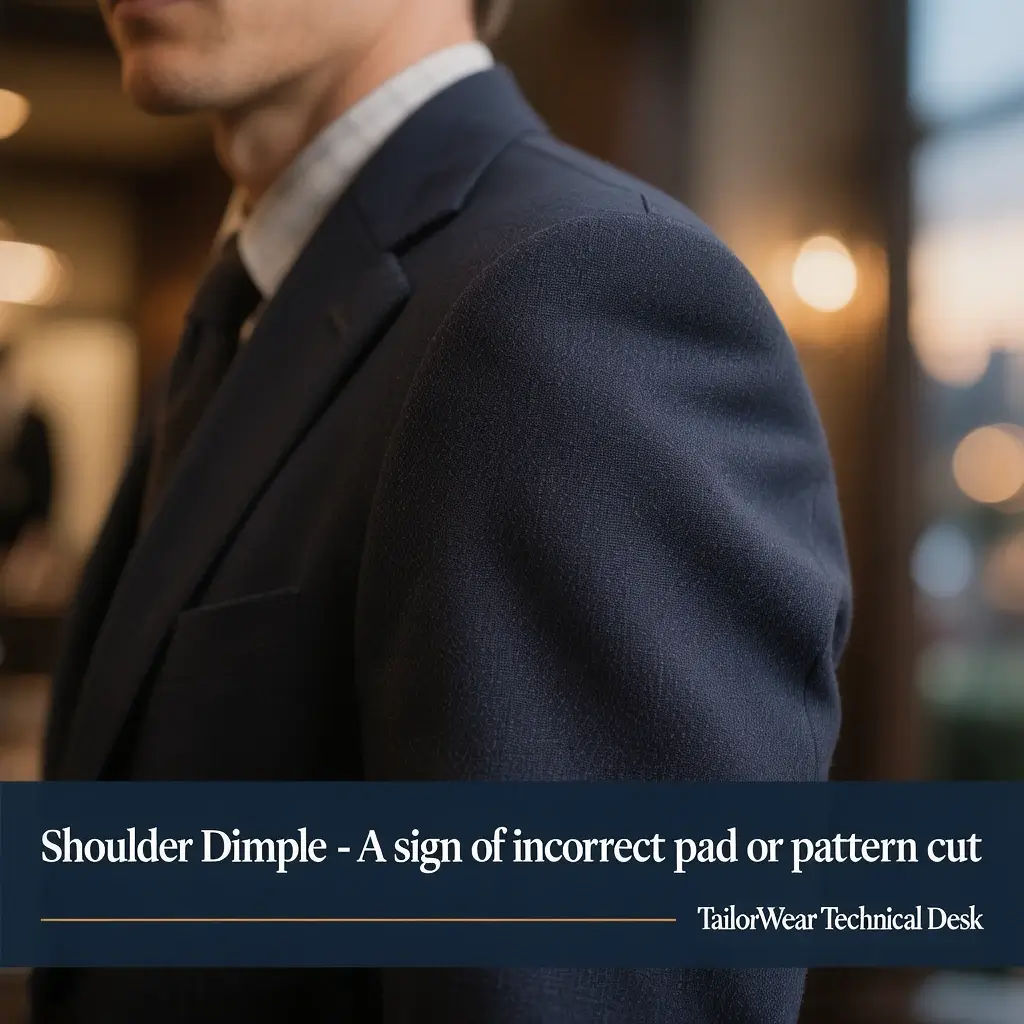
The shoulders are the foundation of a well-tailored jacket. If you notice dimples or ripples near the front shoulder seam, it means one of two things; either the shoulder pads are too thick or the cut doesn’t align with your natural shoulder line. Mass-market brands use standard templates that rarely match individual posture. The result? Awkward tension and puckering.
At TailorWear, our bespoke blazers are sculpted to mirror your natural slope, ensuring the jacket sits clean and relaxed. The rule is simple – the shoulder seam should end exactly where your arm begins. Anything beyond that, and you lose definition.
2. Sleeve Length: Let the Shirt Speak
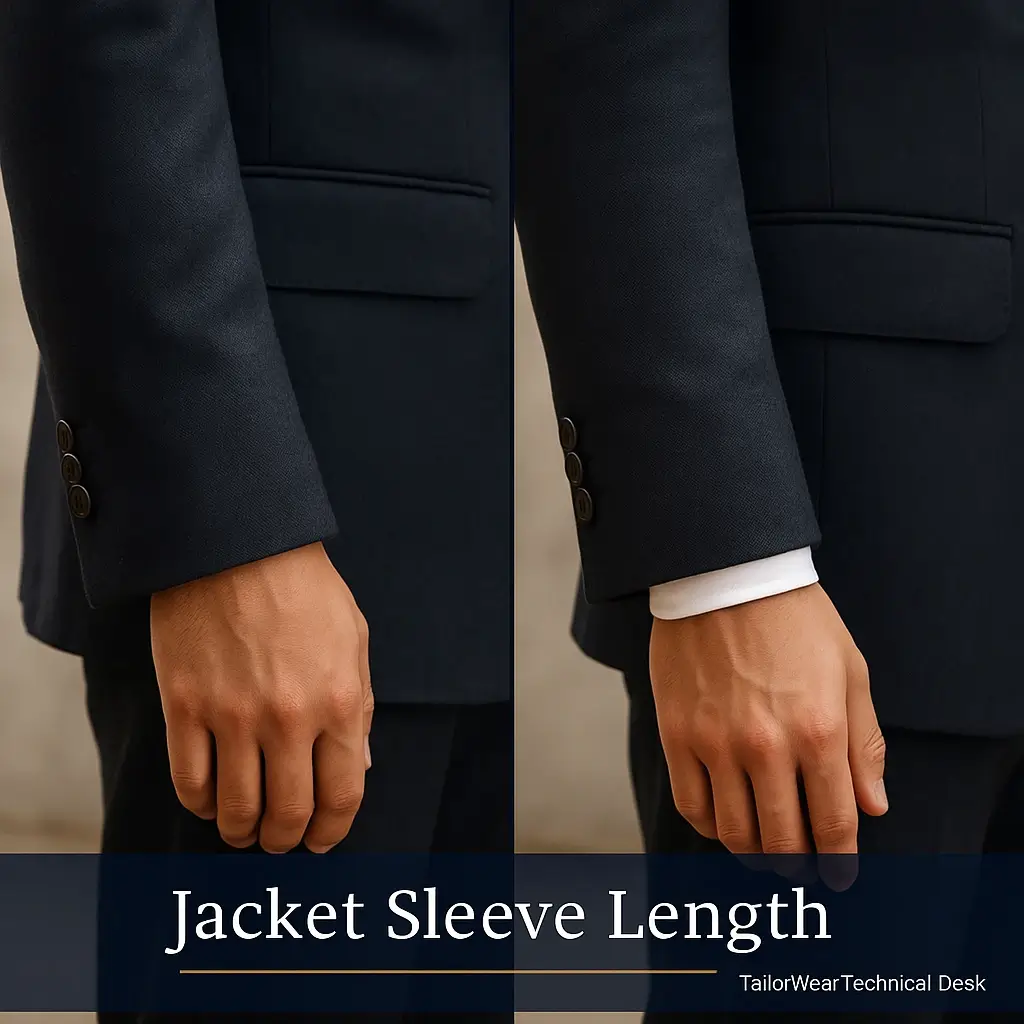
When your blazer sleeves are the right length, they subtly frame your shirt. Half an inch of the shirt cuff should peek out when your arms are relaxed. This hint of cuff not only adds sophistication but also gives proportion to your arms.
If your sleeves completely cover the shirt, the jacket looks oversized; if they’re too short, the effect is unfinished. The perfect length can only be judged after movement. Bend your elbows and raise your arms slightly. Your blazer should allow this motion gracefully, without shifting awkwardly.
3. Back Fit — Smooth, Sculpted, Seamless
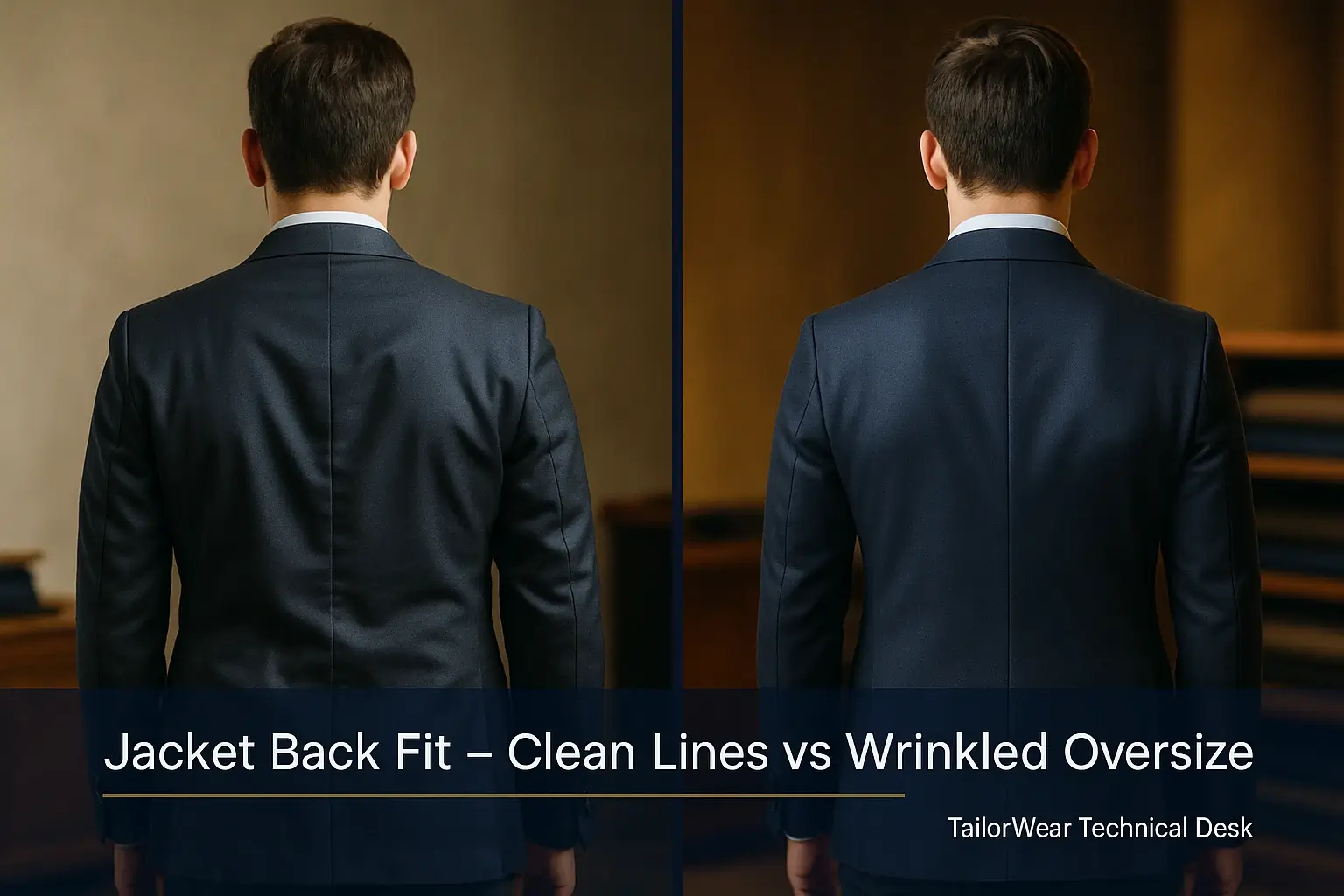
The back of your blazer reveals everything about its construction. Wrinkles, sagging fabric or creases near the shoulder blades are signs of poor cutting or excess cloth. A perfect fit should appear smooth like a second skin, with no tension lines even when you move.
A well-drafted pattern accounts for your spine curvature and posture, letting the jacket fall cleanly. This is where bespoke tailoring outshines any ready-made purchase. It’s architecture, not just apparel.
4. Collar Gap: The Silent Giveaway of Bad Fit
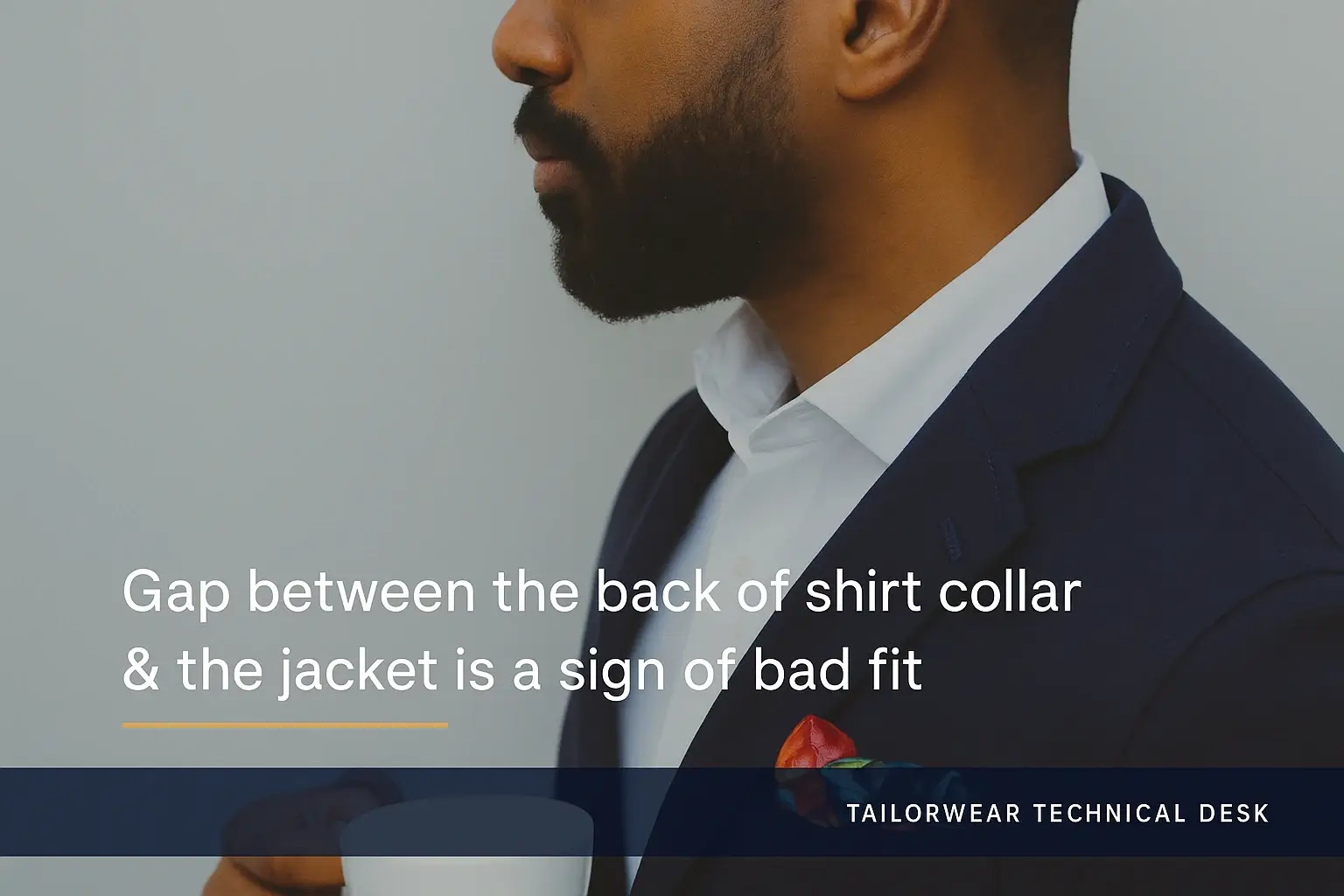
A visible gap between your shirt collar and blazer collar is one of the most overlooked yet crucial indicators of poor fit. It means the jacket’s collar is either cut too wide or the shoulders are misaligned with your neck posture. In a perfect blazer, the jacket collar hugs the shirt collar neatly with no daylight between them.
This detail defines the blazer’s harmony with your upper frame. When the collar sits perfectly, it signals craftsmanship and precision, the kind you can only get from a measured fit, not a guessed size.
5. Proportion: The Art of Visual Balance
Beyond technical fitting, true style lies in proportion. Your blazer length should roughly cover your seat, and the lapel width should complement your shoulder breadth. Overly wide lapels overpower smaller frames; narrow lapels make broader builds look disproportionate. A balanced blazer creates symmetry and natural elegance.
Buttons, pocket placement, and vent styles also contribute to proportion. TailorWear ensures that these are adjusted not only to your measurements but also to your body geometry, because fit isn’t just about size, it’s about posture, movement, and expression.
“A blazer should fit so naturally that it feels like it was always yours.”
Invest in the Blazer That Fits Your Life
A great blazer doesn’t just fit your shoulders, it fits your lifestyle. Whether it’s your first custom piece or your next upgrade, let TailorWear help you discover the difference that true bespoke craftsmanship can make.



My fiance and I are getting married soon. I want his suit to look so good. I like your tip about choosing a solid color.